Cystic Fibrosis
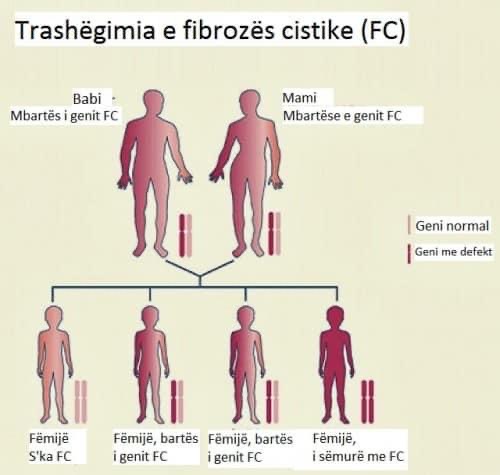
Cystic fibrosis (CF), also known as mucoviscidosis, is a congenital disease, meaning it is genetically inherited. It is passed from parent to child in an autosomal recessive pattern. When both parents are carriers of the gene (but are not ill themselves), there is a 25% chance that a child they have will be affected by the disease.
Cystic fibrosis is an inherited multisystem disorder characterized by obstruction and infection of the airways, impaired digestion, and their consequences.
Cystic fibrosis damages the exocrine glands throughout the body. Its clinical picture is varied and may include severe chronic lung disease, exocrine pancreatic insufficiency, nasal polyps, pansinusitis, pancreatitis, gallstones (cholelithiasis) and insulin-dependent hyperglycemia.
The responsible gene is located on the long arm of chromosome 7, an autosomal chromosome, and codes for a membrane conductance regulator protein (CFTR), which regulates the ion transport of epithelial cells in the airways, the digestive tract, the bile ducts, the sweat glands, the salivary glands, the renal tubules and the genitourinary system. Around 700 different mutations of this gene have been identified. In Albania, the most common mutation is ΔF508.
The respiratory tract
The lack of this protein leads to poorly hydrated mucus, which becomes sticky (hence the name mucoviscidosis) and elastic, and is difficult to clear from the airways. As a result, the secretions that remain in the lungs block the airways, starting with the smallest ones, the bronchioles. This blockage makes it easier for various chronic respiratory infections to take hold. Bacterial infections are favored precisely “because of” this excess mucus secretion. This environment is highly favorable to bacterial growth, which is further strengthened by the formation of biofilm. In this way bronchiolitis sets in first, followed by bronchitis. Infections that persist over long periods lead to bronchiolectasis and bronchiectasis, which mainly affect the upper lobes of the lungs.
The digestive tract
In the skin, the sweat glands excrete large amounts of salt. The salivary glands produce thick saliva that over time blocks their ducts, which reduces the amount of saliva and makes it harder to process food in the mouth. The pancreas is smaller and contains cysts. Blockage of its ducts leads to a lack of pancreatic enzyme secretion and, as a result, food is not properly digested in the intestine.
The clinical signs are varied and mainly involve the respiratory and digestive systems.
The respiratory system
Involvement of this system is the main cause of illness and death from cystic fibrosis. The most persistent sign is a dry cough, which may turn into a wet cough and often goes unnoticed at first. The cough usually begins in the first year of life, and in some children as early as the newborn period. In older children the cough is more frequent in the morning and after physical activity. The sputum is purulent and sticky.
Gradually the chest becomes deformed and the fingers take on a clubbed (drumstick) appearance. The child falls behind in physical development. Death may result from progression of the symptoms, from complications (atelectasis, hemoptysis, pneumothorax, cor pulmonale) and above all from infections.
The digestive system
In the very first days of life, meconium ileus may occur in 10–15% of cases. Signs appear within the first 24–48 hours, with abdominal distension, vomiting and failure to pass meconium. Rarely, peritonitis may occur as a result of intestinal perforation. Most children have malabsorption as a result of pancreatic insufficiency. Stools are bulky, fatty, frequent and foul-smelling. The abdomen is distended, muscle mass is reduced, body weight is low, and there is hypoproteinemia.
Diagnosis
The diagnosis is made with a sweat test, which measures the amount of chloride in sweat. A chloride level above 60 mEq/L confirms a diagnosis of cystic fibrosis.
Treatment
Close attention must be paid to diet. It should be complete and higher in calories than the diet of other children of the same age. Restricting fat is no longer necessary, thanks to the effective enzyme medicines now available. Care should also be taken with oral fluids, which are especially recommended during episodes of acute diarrhea and/or in hot weather. Vitamin supplements should also be given, especially fat-soluble vitamins.
Another important part of treatment is chest physiotherapy (airway clearance), which all children with cystic fibrosis should receive and which is especially important for moving secretions. Chest physiotherapy is based on chest percussion combined with postural drainage. At first it is carried out by specialists, but parents can also learn the technique. One to four chest physiotherapy sessions a day have a positive effect on the course of the disease. For older children, active exercise, sports and similar activities are recommended.